
 English
 Español
 Portugues
 Pусский
 Français
 العربية
 Türk dili
 Indonesia
 Tiếng Việt


Copper Tape Armored Cable
ค้นหา {คีย์เวิร์ด} การขายส่ง & คำพูดจากประเทศจีน เราเป็นผู้ผลิตมืออาชีพของ บริษัท {คีย์เวิร์ด} โรงงานและผู้ส่งออกเชี่ยวชาญใน {คำหลัก} ที่มีคุณภาพสูง
สินค้า
การจัดหมวดหมู่:
-
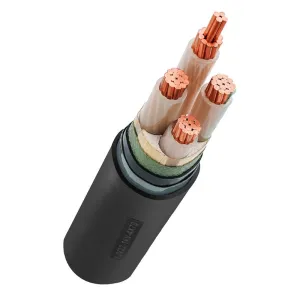
Low Voltage 0.6/1kv Yjlv22 150mm Copper Tape Armored Power Electric Cable 3 4 Core XLPE PVC Underground Power Cable
การจัดหมวดหมู่: สายเคเบิลแรงดันไฟฟ้าต่ำเข้าชม: 1027จำนวน:เวลาเผยแพร่: 2025-09-29 03:39:09The Low Voltage 0.6/1KV YJLV22 150mm² Power Cable is a purpose-built underground transmission solution engineered for low-voltage distribution networks, combining robust mechanical protection, reliable electrical performance, and long-term resistance to harsh underground environments. Designed to operate at a rated voltage of 0.6/1KV (phase-to-ground/phase-to-phase), it features a 150mm² conductor, 3 or 4-core configuration, XLPE (Cross-Linked Polyethylene) insulation, PVC (Polyvinyl Chloride) outer sheath, and copper tape armor—making it a staple for residential, commercial, industrial, and urban infrastructure projects where underground power delivery demands durability, safety, and efficiency. At the heart of the YJLV22 cable is its conductor system, which typically uses high-purity aluminum (with an optional copper variant for high-demand scenarios). Aluminum is selected for its balanced advantages: it offers excellent electrical conductivity (approximately 61% of copper’s conductivity by volume, but with a 30% lower density), reducing the cable’s overall weight and installation costs—critical for underground projects where heavy cables require more labor and equipment to bury. The 150mm² cross-sectional area ensures a high current-carrying capacity: under standard conditions (30°C ambient temperature, direct burial), the 3-core variant can handle up to 250A, while the 4-core version (which adds a neutral conductor) supports up to 230A. This capacity makes it ideal for powering large loads, such as multiple buildings in a residential complex, heavy machinery in industrial parks, or lighting and HVAC systems in commercial centers. The conductor is stranded (Class 2 per IEC 60228) rather than solid, enhancing flexibility to navigate underground ducts or slight bends during installation without conductor fatigue. The XLPE insulation surrounding each conductor is a key factor in the cable’s electrical performance and longevity. Unlike traditional PVC insulation, XLPE undergoes a cross-linking process that transforms its molecular structure into a three-dimensional network, eliminating thermoplastic properties and boosting thermal stability. It operates continuously at temperatures ranging from -40°C to +90°C, with short-term overload tolerance up to +130°C—making it suitable for regions with extreme temperature fluctuations, from frozen northern soils to hot, humid tropical ground. XLPE also has low dielectric loss (tanδ ≤0.003 at 25°C, 1kHz), minimizing power leakage during transmission: for a 100-meter run, the cable loses less than 1.2W at full load, ensuring efficient energy delivery. Additionally, XLPE is resistant to moisture absorption and soil chemicals (e.g., dilute acids, alkalis), preventing insulation degradation from underground humidity or agricultural runoff in rural areas. A defining feature of the YJLV22 cable is its copper tape armor, which wraps tightly around the insulated cores to provide dual protection. Mechanically, the armor shields the cable from underground hazards: it resists pressure from soil compaction (common in urban areas with heavy vehicle traffic above ground), prevents damage from sharp rocks or construction equipment during installation, and deters rodent chewing— a major cause of underground cable failures. Electromagnetically, copper tape acts as a shielding layer, reducing electromagnetic interference (EMI) between the power cable and nearby communication or data cables (e.g., fiber optic lines often buried alongside power cables in urban trenches). This shielding ensures stable power transmission without disrupting sensitive signals, a critical requirement for smart city infrastructure. The PVC outer sheath adds a final layer of protection, designed specifically for underground use. PVC is inherently resistant to moisture, with an IP67 rating that ensures dust tightness and short-term water immersion (up to 1 meter for 30 minutes)—critical for areas with high groundwater levels or occasional flooding. It also resists abrasion from soil particles and chemical corrosion from fertilizers, pesticides, or industrial contaminants in the ground. The sheath’s flexibility allows the cable to adapt to minor ground shifts (e.g., due to seasonal temperature changes or soil settlement) without cracking, extending the cable’s service life to 20–25 years. The cable’s 3-core and 4-core configurations cater to diverse application needs. The 3-core design (live, live, neutral or live, neutral, ground, depending on the system) is widely used for three-phase power transmission in industrial settings, where heavy machinery (e.g., motors, compressors) relies on three-phase power for stable operation. The 4-core variant adds an extra neutral conductor, making it suitable for mixed-load scenarios—such as residential communities where single-phase appliances (e.g., refrigerators, televisions) and three-phase equipment (e.g., community HVAC systems) share the same network. This versatility eliminates the need for separate cables for different load types, reducing installation complexity and costs. In terms of application scenarios, the YJLV22 150mm² cable excels across sectors. In urban areas, it is buried under roads, sidewalks, or green spaces to connect substations to residential towers and commercial malls—replacing overhead cables that clutter city skylines and are vulnerable to weather damage (e.g., storms, strong winds). In industrial parks, it powers factories and manufacturing facilities, with its copper armor and PVC sheath resisting oil leaks, chemical spills, and mechanical impacts from forklifts or heavy machinery. In rural regions, it is used for electrification projects, directly buried in farmland to power irrigation pumps, rural homes, and community centers—its corrosion resistance protecting against agricultural chemicals and soil moisture. It is also a key component in infrastructure projects, such as subway stations, airports, and data centers, where reliable underground power is essential for uninterrupted operations. Installation of the YJLV22 cable is streamlined by its design. Its flexibility (minimum bending radius = 12× the cable’s outer diameter) allows easy routing through underground ducts (typically 100–150mm diameter for 3-core cables) or direct burial in trenches (60–80cm deep, with sand bedding to prevent sheath abrasion). The copper tape armor is compatible with standard grounding systems, ensuring electrical safety by redirecting fault currents to the ground. The cable also complies with global standards, including IEC 60502-1 (for low-voltage power cables), GB/T 12706.1 (Chinese standard), and UL 1072 (North American standard), ensuring compatibility with international electrical systems and components. In summary, the Low Voltage 0.6/1KV YJLV22 150mm² Copper Tape Armored Cable stands out as a reliable, versatile solution for underground low-voltage power distribution. Its aluminum (or copper) conductor delivers efficient current transfer, XLPE insulation ensures thermal and chemical stability, copper tape armor provides robust protection, and PVC sheath adapts to underground conditions. Whether powering cities, factories, or rural communities, it balances performance, durability, and cost-effectiveness—making it a critical component in modern underground power grids.
ข่าว
การจัดหมวดหมู่:
ไม่มีผลการค้นหา!
กรณี
การจัดหมวดหมู่:
ไม่มีผลการค้นหา!
วีดีโอ
การจัดหมวดหมู่:
ไม่มีผลการค้นหา!
ดาวน์โหลด
การจัดหมวดหมู่:
ไม่มีผลการค้นหา!
รับสมัครงาน
การจัดหมวดหมู่:
ไม่มีผลการค้นหา!
ผลิตภัณฑ์ที่แนะนำ
ไม่มีผลการค้นหา!



 โทรศัพท์
 จดหมาย