
 English
 Español
 Portugues
 Pусский
 Français
 العربية
 Türk dili
 Indonesia
 Tiếng Việt


VV/Kvv PVC Sheath
ค้นหา {คีย์เวิร์ด} การขายส่ง & คำพูดจากประเทศจีน เราเป็นผู้ผลิตมืออาชีพของ บริษัท {คีย์เวิร์ด} โรงงานและผู้ส่งออกเชี่ยวชาญใน {คำหลัก} ที่มีคุณภาพสูง
สินค้า
การจัดหมวดหมู่:
-
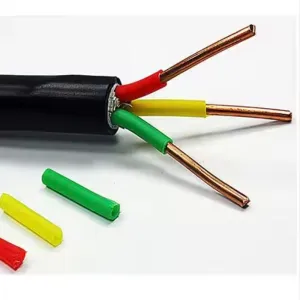
VV/Kvv-3*1.5 Electrical Wires Durable Copper Core PVC Insulation PVC Sheath
การจัดหมวดหมู่: การสร้างสายไฟเข้าชม: 404จำนวน:เวลาเผยแพร่: 2025-09-29 02:38:54The VV/KVV-3×1.5 electrical wire is a widely used low-voltage power transmission and control cable, distinguished by its durable copper core, double-layer PVC (polyvinyl chloride) protection (insulation + sheath), and three-core structure. Designed primarily for voltages up to 0.6/1kV, it balances reliability, cost-effectiveness, and ease of installation, making it a staple in residential, commercial, and light industrial electrical systems. While it shares basic structural similarities with other PVC-insulated cables, its specific combination of conductor material, core configuration, and protective layers addresses the core needs of low-voltage circuit stability and long-term safety—earning it a reputation as a "workhorse" in daily electrical applications. At the heart of the VV/KVV-3×1.5 wire is its durable copper core, a critical component that defines its electrical performance and longevity. The conductor is made of high-purity electrolytic copper (with a purity of over 99.95%), which offers exceptional electrical conductivity—significantly reducing power loss during current transmission compared to aluminum or copper-clad aluminum alternatives. For the 3×1.5 specification, the cable consists of three independent copper cores, each with a cross-sectional area of 1.5 square millimeters. These cores are typically stranded (composed of multiple fine copper wires twisted together) rather than solid, a design choice that enhances flexibility. Stranding allows the cable to bend easily around corners, pass through narrow conduits, or adapt to irregular installation spaces (such as wall cavities or equipment enclosures) without cracking the conductor or compromising electrical flow. Additionally, copper’s inherent resistance to oxidation and corrosion ensures the conductor maintains stable performance even in moderately humid environments, extending the cable’s service life to 15–20 years under normal operating conditions. The PVC insulation layer surrounding each copper core is another key feature, serving as the first line of defense against electrical hazards. Made of high-quality rigid PVC compound, this layer is extruded tightly around each core to form a uniform, seamless barrier that prevents current leakage and short circuits between adjacent cores. PVC insulation boasts excellent electrical insulation properties, with a volume resistivity of ≥10¹⁴ Ω·cm at 20°C—far exceeding the minimum requirements for low-voltage cables. It also exhibits strong resistance to common environmental stressors: it can withstand temperatures ranging from -15°C to 70°C (continuous operation), making it suitable for most indoor and sheltered outdoor environments (such as under eaves or in well-ventilated utility rooms). Unlike some organic insulation materials, PVC is non-hygroscopic, meaning it does not absorb moisture—a critical advantage in areas prone to dampness (e.g., basements or bathrooms), where moisture absorption could degrade insulation performance and increase shock risks. Complementing the inner insulation is the PVC outer sheath, which provides comprehensive mechanical and environmental protection for the entire cable. The sheath is extruded over the three insulated cores (bundled together), forming a tough, abrasion-resistant outer layer that shields the cable from physical damage during installation and use. It can withstand moderate impact (such as accidental knocks from tools during construction) and resist wear from friction against walls, conduits, or other building materials. The PVC sheath also enhances the cable’s resistance to chemicals commonly found in residential and commercial settings, including dilute acids, alkalis, and oil-based substances—preventing degradation from accidental spills or exposure to cleaning agents. For added practicality, the sheath is often colored (typically black, white, or gray) to facilitate identification during installation, helping electricians distinguish power cables from signal or control cables and reducing wiring errors. While VV and KVV cables share the same 3×1.5 core configuration, copper conductor, and PVC insulation/sheath, they differ slightly in their intended use—an important distinction for proper application. VV cables are classified as power cables, primarily designed for transmitting low-voltage power in distribution systems. They are commonly used to connect main distribution boxes to sub-circuits (e.g., lighting circuits, socket circuits in living rooms or bedrooms) and to power small to medium-sized electrical appliances (such as refrigerators, air conditioners, or washing machines) that require stable power supply. Their current-carrying capacity (approximately 14–18A for 1.5mm² copper cores, depending on ambient temperature) is well-matched to the power demands of typical household and commercial devices, ensuring safe, efficient operation without overheating. In contrast, KVV cables are control cables, optimized for transmitting electrical signals in control systems rather than high-power current. They are widely used in industrial control panels, building automation systems (e.g., HVAC control, lighting dimming systems), and low-voltage electrical equipment (such as elevators or security cameras) to send command signals between components. While their copper cores and PVC protection are identical to VV cables, KVV cables often have tighter manufacturing tolerances for insulation thickness and core spacing to ensure stable signal transmission, minimizing interference from external electromagnetic fields. This makes them ideal for scenarios where signal integrity is critical—for example, in a commercial building’s fire alarm system, where KVV-3×1.5 cables can reliably transmit trigger signals between smoke detectors and the main control panel. The versatility of the VV/KVV-3×1.5 wire is further reflected in its broad application scenarios. In residential buildings, VV-3×1.5 cables are a top choice for lighting circuits (where the three cores can separate neutral, live, and ground wires) and socket circuits in areas with moderate power needs (e.g., bedrooms or home offices). They are also used to connect fixed appliances like built-in ovens or dishwashers, where their durability and heat resistance (within the 70°C operating limit) ensure safe long-term use. In commercial settings (such as offices, retail stores, or restaurants), VV cables power lighting grids and point-of-sale systems, while KVV cables support control functions like automated door systems or digital signage. In light industrial environments (e.g., small workshops or warehouses), the cable is used to power low-voltage machinery and transmit control signals between equipment and control panels—its robust PVC sheath standing up to the slightly harsher conditions of industrial use. When it comes to installation, the VV/KVV-3×1.5 wire offers significant advantages for electricians. Its stranded copper cores and flexible PVC layers make it easy to handle and route, even in tight spaces. It can be installed in conduits (metal or plastic), embedded in walls or ceilings (with proper protection against mechanical damage), or laid in open trays (in industrial settings)—adapting to various installation methods without compromising performance. The cable also complies with international safety standards (such as IEC 60227, GB/T 5023 for Chinese markets, and UL 758 for North America), ensuring it meets strict requirements for flame retardancy, smoke emission, and electrical safety. For example, most VV/KVV-3×1.5 cables are rated for vertical flame tests, meaning they will self-extinguish if exposed to fire, reducing the risk of fire spread in residential or commercial buildings. In summary, the VV/KVV-3×1.5 electrical wire stands out as a reliable, versatile solution for low-voltage power transmission and control. Its durable copper core ensures efficient, long-lasting current/signal transmission, while the double-layer PVC protection guarantees safety and resilience in diverse environments. Whether used in homes, offices, or light industrial facilities, it meets the practical needs of daily electrical systems—offering a balance of performance, durability, and cost that has made it a preferred choice among electricians and electrical engineers worldwide. Its ability to adapt to both power and control applications further solidifies its position as a foundational component in modern low-voltage electrical infrastructure.
ข่าว
การจัดหมวดหมู่:
ไม่มีผลการค้นหา!
กรณี
การจัดหมวดหมู่:
ไม่มีผลการค้นหา!
วีดีโอ
การจัดหมวดหมู่:
ไม่มีผลการค้นหา!
ดาวน์โหลด
การจัดหมวดหมู่:
ไม่มีผลการค้นหา!
รับสมัครงาน
การจัดหมวดหมู่:
ไม่มีผลการค้นหา!
ผลิตภัณฑ์ที่แนะนำ
ไม่มีผลการค้นหา!



 โทรศัพท์
 จดหมาย